--- 1% Peace Dividend Analysis ---
Total Annual Cost of War: $11.4T
-----------------------------------
Captured Dividend (1% of Military Spend): $27.2B
Societal Dividend (1% of Total Costs): $114BPeace Dividend Analysis
The Economic Benefits of Reduced Conflict
Abstract
By redirecting 1% of global military spending to hyper-efficient pragmatic clinical trials, humanity can achieve 514 years of medical research in 20 years and shift the cure of every disease forward by 8.2 years, saving 416 million lives and generating $1.2 quadrillion in value.
Keywords
war-on-disease, 1-percent-treaty, medical-research, public-health, peace-dividend, decentralized-trials, dfda, dih, victory-bonds, health-economics, cost-benefit-analysis, clinical-trials, drug-development, regulatory-reform, military-spending, peace-economics, decentralized-governance, wishocracy, blockchain-governance, impact-investing
This analysis quantifies the economic benefits derived from a 1% reduction in global military spending and the broader costs of conflict. The calculations are based on the data compiled in the Cost of War analysis.
This analysis models two types of benefits:
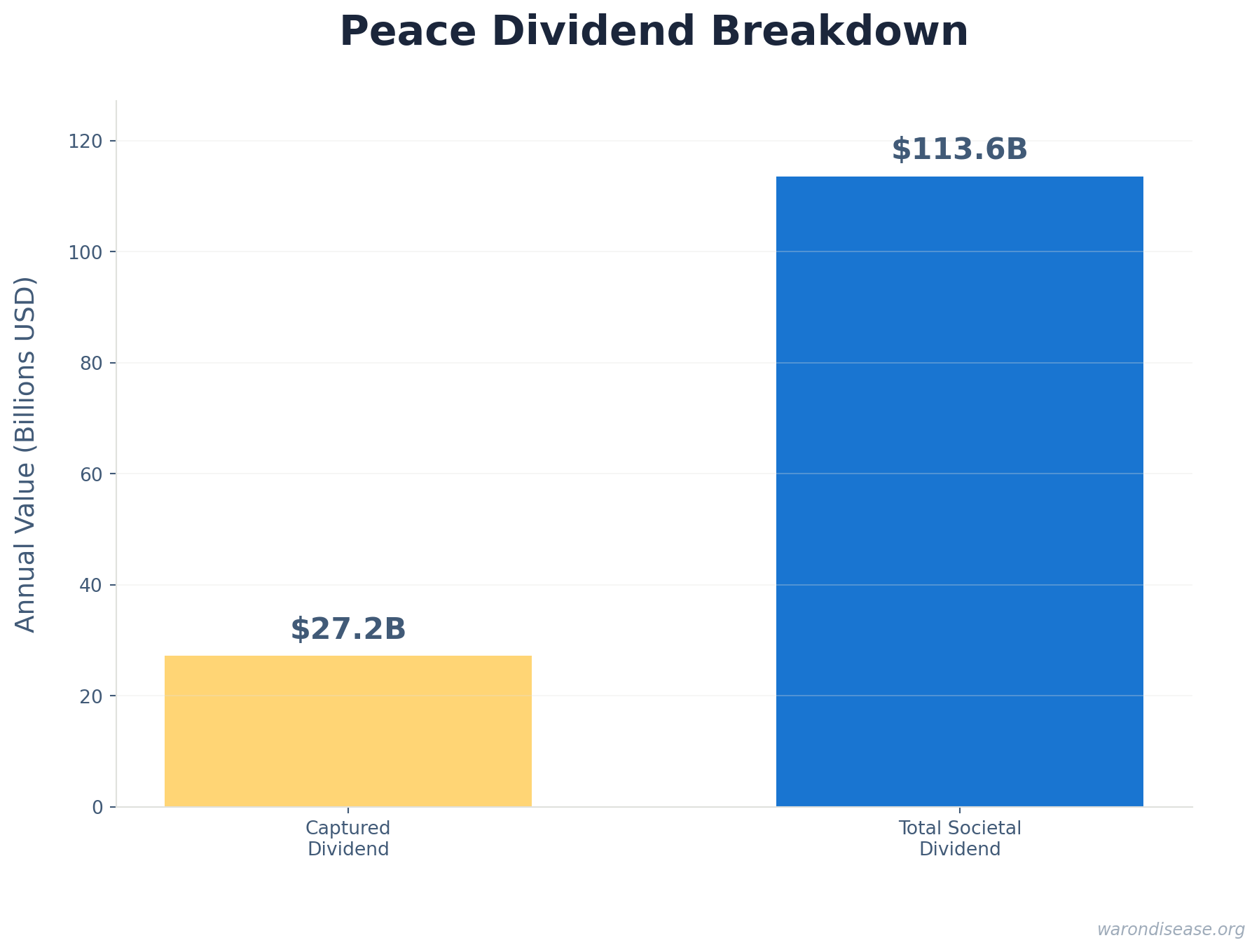
- The Captured Dividend: The direct funds redirected from military budgets to the 1% Treaty Fund.
- The Societal Dividend: The total economic value retained by society due to a 1% reduction in all conflict-related costs.
Cost of War Data and Calculations
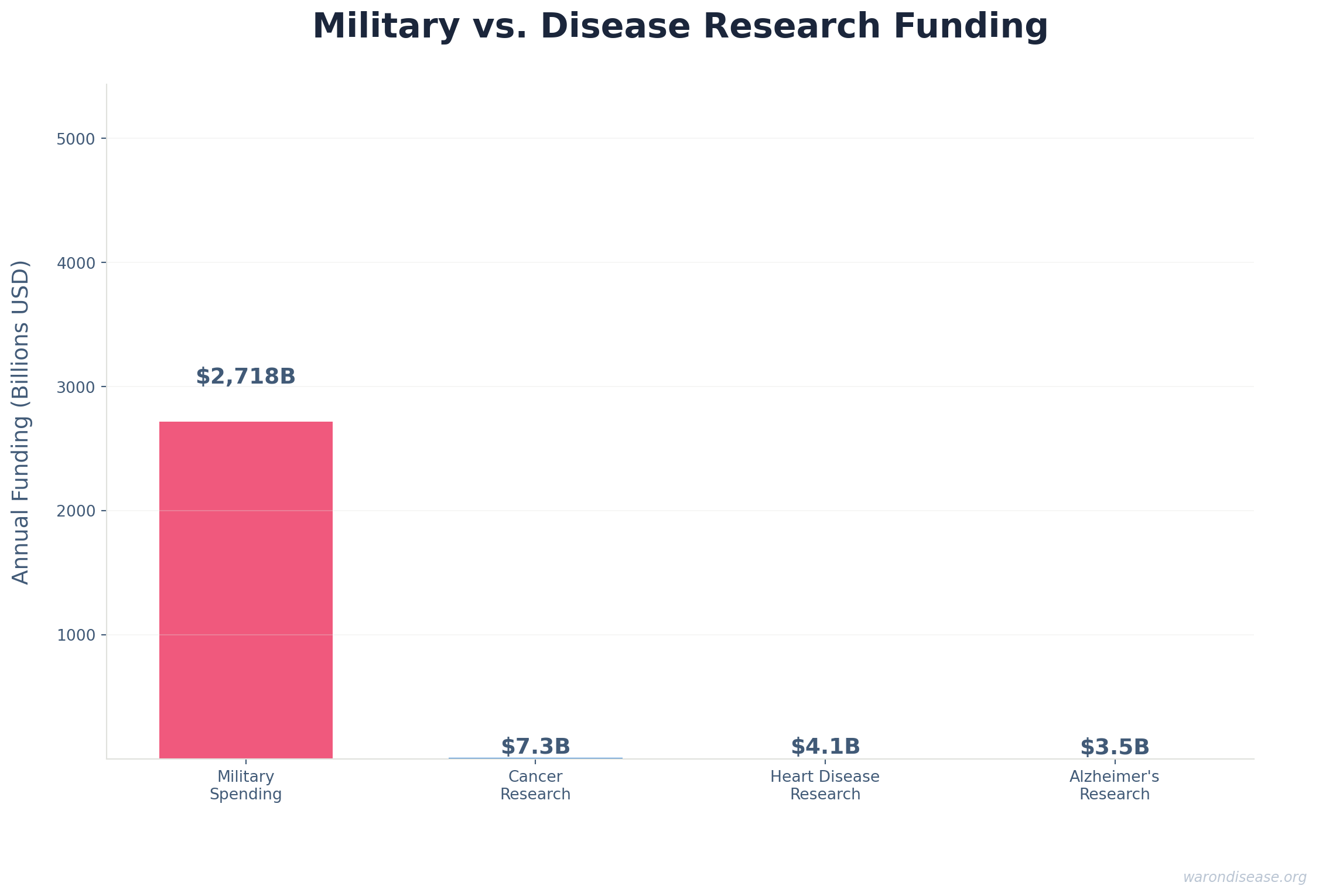
This chart shows the stark contrast between military spending and disease-specific research funding, highlighting the massive opportunity for reallocation.
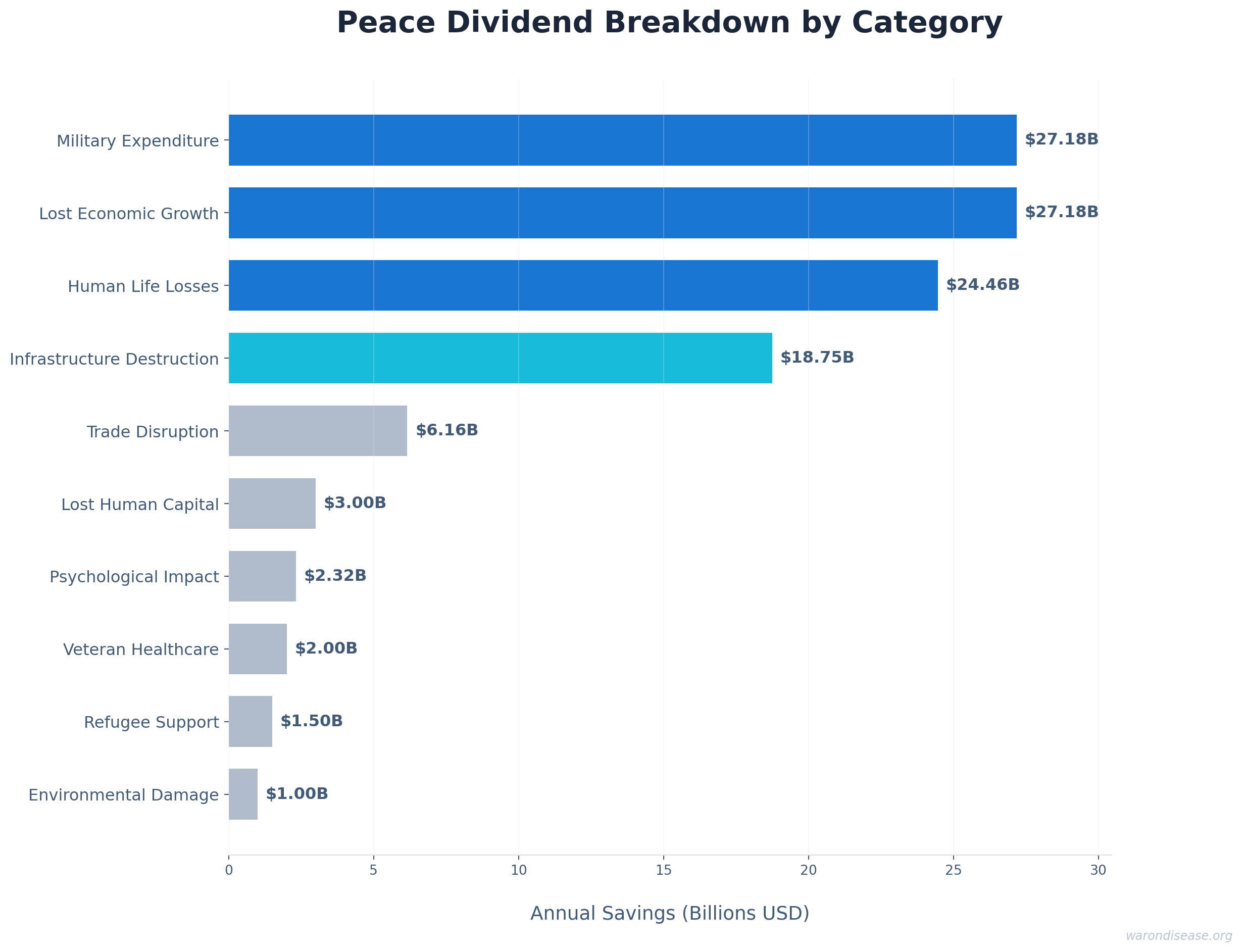
Peace Dividend Breakdown by Category
This detailed breakdown shows where the economic benefits come from when we reduce conflict by just 1%.
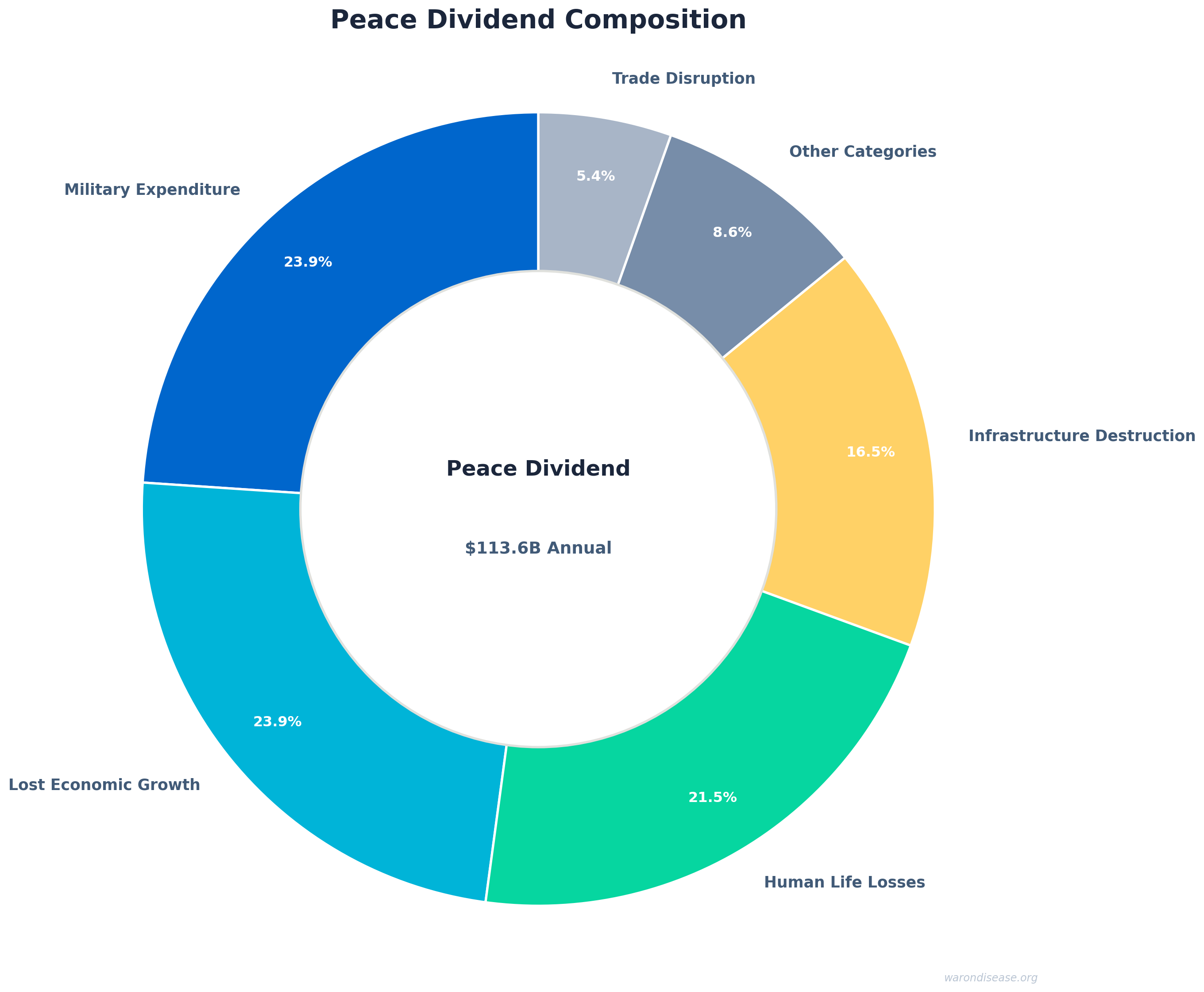
Peace Dividend Composition
This donut chart shows the relative contribution of different cost categories to the total peace dividend.
Captured vs. Societal Dividend
This chart distinguishes between the two types of peace dividend benefits.
Sensitivity Analysis
A key principle of rigorous economic modeling is to test the assumptions to understand how they impact the final conclusions. A sensitivity analysis allows you to see how the “Societal Dividend” changes when you vary the key inputs.
In this analysis, you vary two key parameters simultaneously:
- Reduction Percentage: You model a range of reductions from 50% to 2.0% to see the impact of partial or greater-than-expected success.
- Accuracy of Indirect Cost Estimates: The indirect costs of war (like lost economic growth) are harder to quantify than direct spending. You model a scenario where these costs might be overestimated or underestimated by 25%.
--- Sensitivity Analysis: Societal Dividend ($ Billions) ---
Reduction %                         0.5%               1.0%  \
Indirect Cost Scenario
-25%                    52,150,375,000.0  104,300,750,000.0
0%                      56,775,500,000.0  113,551,000,000.0
25%                     61,400,625,000.0  122,801,250,000.0

Reduction %                          1.5%               2.0%
Indirect Cost Scenario
-25%                    156,451,125,000.0  208,601,500,000.0
0%                      170,326,500,000.0  227,102,000,000.0
25%                     184,201,875,000.0  245,602,500,000.0
Key Findings
The peace dividend analysis reveals:
Massive Scale: Even a 1% reduction in conflict costs generates $114+ billion annually in societal benefits
Two-Tier Benefits:
- Captured Dividend: $27.2B annually (direct military budget reallocation)
- Societal Dividend: $114B annually (total economic benefits)
Robust to Assumptions: The sensitivity analysis shows the benefits remain substantial even under conservative scenarios
Clear Opportunity: The contrast with disease research funding ($67.5B total) shows the massive potential for reallocation
This analysis provides the economic foundation for a 1% treaty initiative, demonstrating that even modest reductions in conflict can generate substantial resources for pragmatic clinical trials and other beneficial purposes.
Reuse
Copyright
© 2025 Mike P. Sinn